
Nestle surged 4.25 per cent after the FMCG major reported 4.94 per cent increase in net profit at Rs 688.01 crore for the quarter ended December 31, 2024. IndusInd Bank, Titan, Tata Motors, Tata Steel, ITC and Maruti were the other major gainers. ITC Hotels, Bharti Airtel, Bajaj Finserv, Bajaj Finance and ICICI Bank were among the laggards.

Adani Ports, NTPC, Infosys, Hindustan Unilever, HCL Technologies and Sun Pharma were among the other big gainers. However, Larsen & Toubro, Bajaj Finance, State Bank of India, Axis Bank and HDFC Bank were amonh the major laggards.

Mahindra & Mahindra, Titan, Sun Pharma, ITC, Nestle and Tata Motors were the other big gainers. Reliance Industries, Kotak Mahindra Bank, Bajaj Finance and JSW Steel were among the laggards.

'Consider 40% to 50% in equities, 10% in gold as a hedge, and the remaining 30% to 40% split between multi-asset funds and hybrid funds.'

Despite a dull macro-economic environment almost all the FMCG companies posted a decent volume growth.

The October-December quarter (Q3FY25) results of fast moving consumer goods (FMCG) major Hindustan Unilever (HUL) indicated weak demand, with urban growth muted and rural showing recovery. Consolidated revenue grew by 1.6 per cent (volume was flat) to Rs 15,818 crore, due to price hikes. Prices of key raw materials such as palm oil and tea remained elevated, leading to compression of gross margin.

FMCG CEOs indicate that the market should stabilise post the general elections and that some growth should make its way back especially in rural areas

The prospective bidders of Haldiram Snacks Foods (HSFPL), a leading food firm, have sought clarity on the ownership of the brand as it is currently owned by different family factions. The Delhi and Nagpur families have decided to merge their operations and formed a joint venture to sell part of their stake. On the other hand, the Kolkata family runs its separate, independent operations. Bankers said prospective bidders of the company do not want any confusion over the brand in future. They have sought clarity over usage of the brand.

FMCG sector analysts say that due to excise free zones, impact of the excise duty hike will be limited, except for Hindustan Lever. The sector wants impetus for rural income generation and no hike in service tax.

A break-up of business shows that 75% of a firm's turnover is led by volume growth, while 25% is price-led. Companies such as Britannia, Nestl, Dabur, Marico, Kellogg, Parle Products, and Hindustan Unilever have increasingly focused on smaller packs of their key products, aimed at improving sales.

'Inflation is not good for industry. Nor for the economy as a whole.'

The slowdown had been brewing since 2016 but was intensified further by several disruptions in the past two years including demonetisation.

With 21 states having implemented value-added tax and eight states still to adopt it, the impact of the new tax regime is seen largely positive for sectors like FMCG, paper and pharmaceuticals.

Most brokerages are betting that the new government will shift to a policy focussing on boosting rural incomes and consumption since that has clearly been a pain point.

Excise duty hike for cigarettes could be lower.
The thrust on agriculture, removal of Fringe Benefit Tax etc should help improve the earnings of the FMCG sector

'Domestic investors are opening up to the idea of high-growth Internet companies as a pool of value creation.' 'They like the execution that they see with Zepto, and for us, that is the most important factor.'

India Inc continued to grapple with muted revenue growth in the September 2024 quarter (Q2FY25) and witnessed a decline in margins and profits. The headwinds were especially severe for non-financial companies, while banking, financial services, and insurance (BFSI) firms significantly outpaced the rest of the corporate sector. The total profit of 1,353 listed companies that have released their Q2FY25 results thus far dropped by 0.6 per cent year-on-year (Y-o-Y) - the first cumulative earnings decline in eight quarters.

Increase in tax exemption limit by Rs 50000 is positive for the FMCG sector, as it will leave more discretionary income in the hands of consumers.
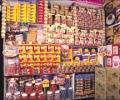
The FMCG sector's demand growth will be powered by effective reduction in the personal taxes and increased allocation under NREGA, though hike in excise duty lead inflation is a cause for concern
'Investors should consider small and midcaps only if they can handle volatility and have a longer investment horizon.'

FMCG major Britannia Industries' results for the January-March quarter (Q4) of the financial year 2023-24 (FY24) were received enthusiastically by the market with the share going up by 6.7 per cent on Monday to close at Rs 5,061.60 on the BSE. However, analysts said the results were in line with margins, and disappointing in terms of revenue growth. The consolidated net sales (excluding other operating income) rose 3 per cent year-on-year (Y-o-Y) to Rs 4,010 crore in Q4.
.jpg)
High retail inflation is exerting pressure on households to cut expenses wherever possible.
The budget was negative for the FMCG sector.

The "asset-right" strategy, reiterated by ITC chairman Sanjiv Puri during the company's 112th annual general meeting (AGM) on August 11, received a thumbs up from the analysts. They, however, believe that sustained earnings growth and synergies with the demerged hotel's vertical will help the stock break out from the ongoing consolidation. "The stock is expected to consolidate between Rs 420 and Rs 450 in the near future.

'Food inflation is important and if that is controlled, then consumption will go up.'
ITC highlighted that legal cigarettes account for 9 per cent of tobacco consumption in India, but 80 per cent of tax collection is from tobacco products. While illicit cigarettes account for roughly one-third of the market share, legal cigarette volumes have recovered to around 96 per cent of peak FY13 volumes, after dipping to 70 per cent in FY21.

ITC's results for the January-March quarter (Q4) were strong, with robust growth in the fast-moving consumer goods (FMCG) segment and a good performance in hospitality. The tobacco division's performance was on expected lines, with double-digit volume growth, helped by reclaiming of market share from the smuggled trade. There was 60 per cent growth in non-cigarette earnings before interest and tax (Ebit), despite a relatively weak performance in paperboards.
If an entire business is constructed on the platform of one brand ambassador, there is inherent risk of life-after.

While India Inc seems to be generally pleased with the budget, there are, however, some discordant voices with the shipping, FMCG and education sectors saying there is nothing in the budget for them.

'We are confident that over the next few years the government will strike a fine balance between populist measures and growth, and manage coalition partners well.'

Finance Minister Nirmala Sitharaman is likely to step up efforts to boost consumption and rural economy while keeping inflation under check when she presents her sixth straight Budget on February 1. Experts said one way to boost consumption is to put more money in the hands of people, and one of the possible ways of doing it is by reducing the tax burden through tinkering with tax slabs or increasing the standard deduction. Another proposal is related to increasing the funds under the rural employment guarantee scheme MGNREGA and higher payout for farmers.

Hindustan Unilever Ltd on Thursday reported a 6.9 per cent rise in consolidated profit after tax at Rs 2,556 crore in the first quarter ended June 30, 2023, riding on a gradual recovery in the FMCG industry despite operating in challenging environment. The company had posted a consolidated net profit of Rs 2,391 crore in the same quarter last fiscal, Hindustan Unilever Ltd said in a regulatory filing. Consolidated total income in the first quarter stood at Rs 15,679 crore as against Rs 14,757 crore in the corresponding period last fiscal.

From anti-profiteering to affixing stickers on existing stocks, FMCG companies are bracing for new set of GST challenges

As wholesalers largely failed to meet GST norms, companies were in a fix. According to industry veterans like Sunil Duggal, chief executive of Dabur, the hazard led many to look beyond third-party distribution and take the leap to cover unattended markets directly.

Discount retailer DMart (Avenue Supermarts) hit its highest levels in a year and a half last week and is up over 11 per cent in the last one month. The company depends on low operating costs to offer the lowest prices to consumers, which enables sales velocity and scale, further reducing costs. This virtuous feedback loop has helped DMart gain market share in a sector dominated by unorganised stores.

With a growing penetration of the Internet, which reaches to rural areas of the country, the retailers would be able to deepen their market
